

Blogs
Is Your Smartphone Habit Increasing Your Risk of Hemorrhoids?

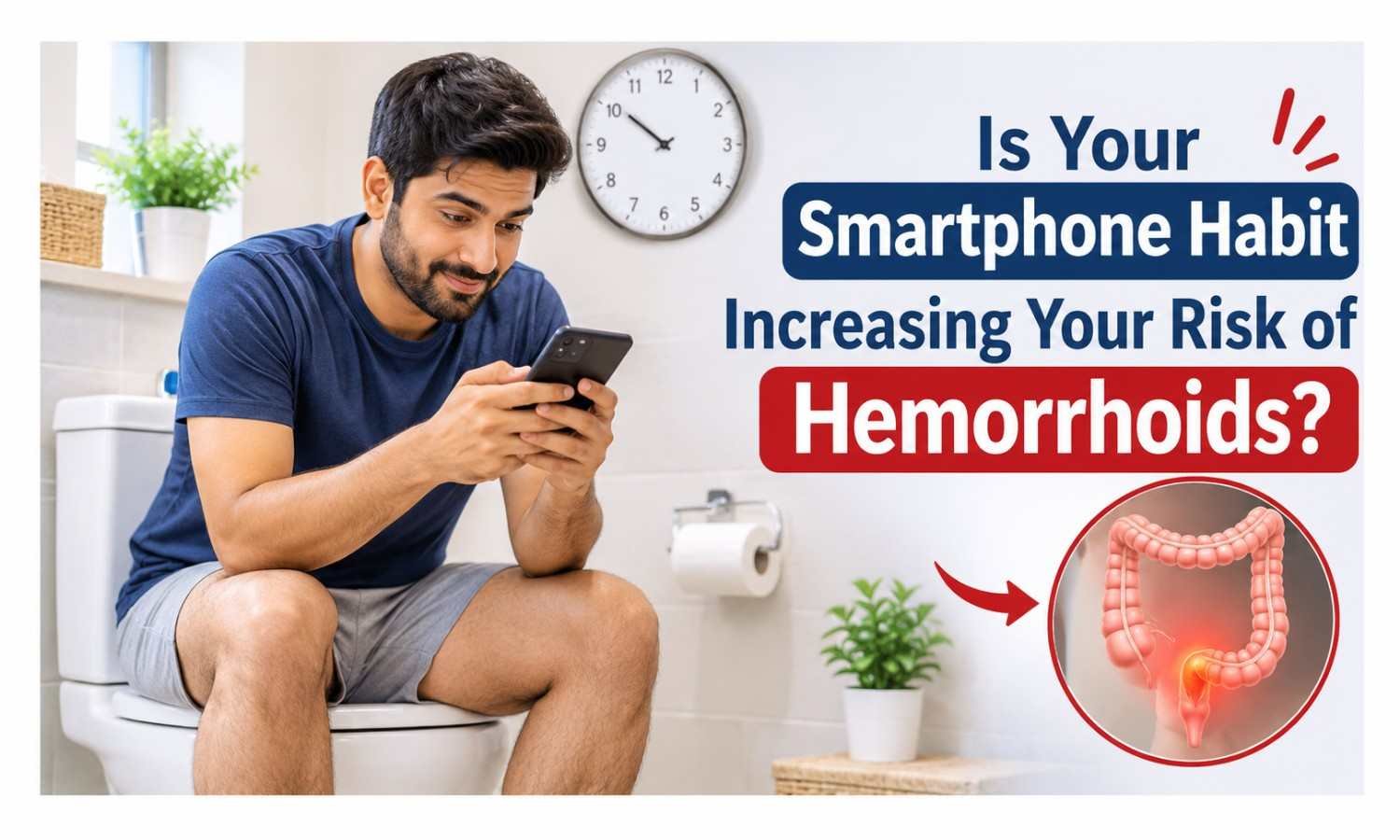
Your smartphone might be your all-time best companion; however, carrying it along wherever you go, even to the toilet, might have some impact on your rectal health. People tend to waste more time while they browse their Facebook news feed or any other social media platform. The apparently harmless smartphone habit may contribute to your excessive toilet sitting, which is known to increase the chances of having hemorrhoids or piles in general.
In case you feel anal pain, bleeding, or experience any discomfort, professional consultation on piles and fissure treatment in Delhi might help you identify the possible cause. At Dr. Piles Clinic, it is crucial for patients to know the importance of proper bathroom habits in order to comprehend anorectal health. Let’s discuss what science has to say on that matter.
Understanding the Connection Between Smartphone Use and Hemorrhoids
Piles are hemorrhoids, which are simply swollen blood vessels in the lowest region of the rectum and at the anus opening. They are normally a part of the body’s anatomy, but they may become enlarged under specific circumstances.
There are two common types:
- Internal hemorrhoids: Develop inside the rectum and may cause painless rectal bleeding during bowel movements.
- External hemorrhoids: Develop under the skin around the anus and may cause itching, swelling, discomfort, or pain.
So, where does your phone fit into this picture?
The smartphone habit may make a person stay longer on the toilet than required. Rather than doing their business and then getting off the toilet, they keep watching movies or looking at social media feeds on their phone.
Such prolonged sitting on the toilet increases the pressure in the anorectal region. Although the use of smartphones is not proven as the reason for developing hemorrhoids, spending too much time on the toilet is known as a potential risk factor.
Why Spending Too Much Time on the Toilet Can Be Harmful
Toilet must have a single use only, that is not to become an entertainment area too. When you keep sitting for long periods of time, your tissues in your rectal and anal areas will still be subjected to pressures.
Here are some reasons why excessive bathroom time deserves attention:
- Increased Pressure Around the Rectal Area: Prolonged sitting on a toilet can increase pressure around the anal region. This may affect the blood vessels supporting the hemorrhoidal cushions.
- Delayed Bowel Movements: Sometimes, people ignore their body’s natural signals because they are distracted by their phones. Healthy bowel habits involve responding to the urge to pass stool rather than repeatedly postponing it.
- Unhealthy Bathroom Habits: A smartphone habit can make people lose track of time. Five minutes can quickly become twenty, especially when social media keeps offering another interesting video.
The solution is simple: finish your bowel movement without unnecessary distractions.
Common Risk Factors That Can Increase Hemorrhoid Problems
Smartphone toilet habits are only one part of a much bigger picture. Several lifestyle and digestive factors can contribute to hemorrhoidal disease.
| Risk factor | How it may contribute |
| Chronic constipation | Hard stools can make bowel movements difficult. |
| Straining during defecation | Excessive pressure can affect rectal blood vessels. |
| Prolonged toilet sitting | Increases pressure around the anal region. |
| Low-fibre diet | Can contribute to hard stools and constipation. |
| Sedentary lifestyle | May contribute to digestive and bowel difficulties. |
| Chronic diarrhoea | Repeated bowel movements can irritate the anal area. |
| Pregnancy | Increased pelvic pressure can contribute to hemorrhoids. |
These factors highlight why prevention requires more than simply keeping your phone outside the bathroom.
Warning Signs You Should Never Ignore
Hemorrhoids can produce different symptoms depending on their type and severity. Recognising early warning signs can help you seek appropriate medical advice.
Common symptoms include:
- Rectal bleeding: Bright red blood may appear on toilet paper or in the toilet bowl.
- Anal swelling: A lump or swelling may develop around the anus.
- Itching around the anus: Irritation can cause persistent discomfort.
- Anal discomfort: Sitting, walking, or passing stool may become uncomfortable.
- Painful bowel movements: External hemorrhoids or complications may cause pain.
- Mucus discharge: Some people experience mucus around the anal opening.
Remember that rectal bleeding does not always indicate hemorrhoids. Anal fissures, inflammatory bowel conditions, and other gastrointestinal problems can produce similar symptoms.
Therefore, avoid self-diagnosis. A healthcare professional should evaluate persistent or unexplained symptoms.
Read this blog also: Can Rectal Polyps Be Treated Without Surgery? What Ayurveda Offers
Smartphone Habit: Practical Changes for Better Rectal Health
You do not need to stop using your smartphone to improve your bathroom routine. A few sensible lifestyle changes can make a difference.
Keep Your Phone Away From the Toilet
One of the easiest changes is to leave your mobile phone outside the bathroom. This reduces distractions and encourages you to finish your bowel movement without unnecessary delays.
Avoid Prolonged Toilet Sitting
Do not treat the toilet like a comfortable chair. Sit only when you need to pass stool and leave once you finish.
Increase Dietary Fibre
Include fibre-rich foods such as:
- Whole grains and oats
- Fresh fruits
- Green vegetables
- Beans and lentils
- Nuts and seeds
Dietary fibre helps soften stools and supports regular bowel movements. Increase fibre gradually to avoid unnecessary digestive discomfort.
Maintain Adequate Water Intake
Drinking sufficient water supports normal bowel function. Your individual fluid requirements may vary depending on your health, activity level, climate, and medical advice.
Stay Physically Active
Walking, regular movement, and reducing prolonged sitting throughout the day can support general digestive health.
Avoid Straining
Give your body time to complete a bowel movement naturally. Avoid forceful pushing or repeatedly sitting on the toilet when you do not feel the urge.
These simple piles prevention tips can help reduce avoidable risk factors and support better digestive health.
When Should You Consult a Specialist?
Lifestyle changes may aid in preventing this problem but are not a substitute for a proper medical checkup in case of the appearance of symptoms. In case you have frequent haemorrhoids, bleeding, pain or swelling in the anus, as well as problems while having bowel movements, you should see a physician. This point is highlighted by Dr. Piles Clinic as being important to understand the anorectal symptoms and get a proper checkup.
It is also important to understand that different anorectal conditions require different approaches. For example, people searching for pilonidal sinus treatment in Delhi should know that pilonidal sinus is a separate condition involving the skin and tissue near the tailbone. It is not another form of hemorrhoids. Similarly, symptoms associated with anal fissures require proper evaluation before selecting an appropriate treatment.
Healthy Bathroom Habits for Long-Term Prevention
Building healthier bathroom habits does not require complicated routines. Consistency matters more than dramatic lifestyle changes.
Consider following these simple practices:
- Respond to the natural urge to pass stool.
- Avoid carrying your smartphone into the bathroom.
- Do not spend unnecessary time sitting on the toilet.
- Eat a balanced, fibre-rich diet.
- Maintain adequate hydration.
- Stay physically active.
- Avoid excessive straining during bowel movements.
- Seek medical advice when symptoms persist.
These practices can support bowel health and help reduce common hemorrhoid risk factors.
Take the First Step Towards Better Rectal Health – Consult Dr. Piles Clinic
Your smartphone may be an integral part of your routine, but your bathroom should not turn out to be one more place to scroll down through it. The smartphone addiction that causes you to sit too long in the toilet should be changed, especially if you already suffer from constipation and pain in the anus and bowels. Good hygiene practices, enough fibre in the diet, drinking plenty of water, and visiting your doctor if necessary may help to maintain a a healthy rectum.
For more information about anorectal health and professional guidance, visit Dr. Piles Clinic and contact us to discuss your health concerns. Taking timely action can help you make informed decisions about your long-term well-being.
Still Have Questions? We’re Here to Help
1. Can using a smartphone on the toilet cause hemorrhoids?
Smartphone use itself has not been proven to directly cause hemorrhoids. However, mobile phone use on the toilet can encourage prolonged sitting, which is a recognised risk factor.
2. How long should I sit on the toilet?
There is no universal medically established time limit for everyone. However, you should avoid unnecessary sitting and leave once you complete your bowel movement. Do not extend bathroom visits for entertainment.
3. Does prolonged sitting increase piles problems?
Prolonged toilet sitting can increase pressure around the anal and rectal areas. It may contribute to hemorrhoid problems, particularly when combined with constipation and straining.
4. Can dietary changes help prevent hemorrhoids?
Yes, a fibre-rich diet, adequate fluid intake, regular physical activity, and avoiding excessive straining can support healthy bowel movements and reduce common risk factors.
5. When should I seek medical advice for rectal bleeding?
You should seek medical evaluation whenever you notice rectal bleeding, particularly if it recurs or occurs with pain, changes in bowel habits, weakness, or other concerning symptoms. Do not automatically assume that hemorrhoids are responsible.
