

Blogs
Anal Fissure vs Hemorrhoids: Symptoms, Differences & Best Treatment Options

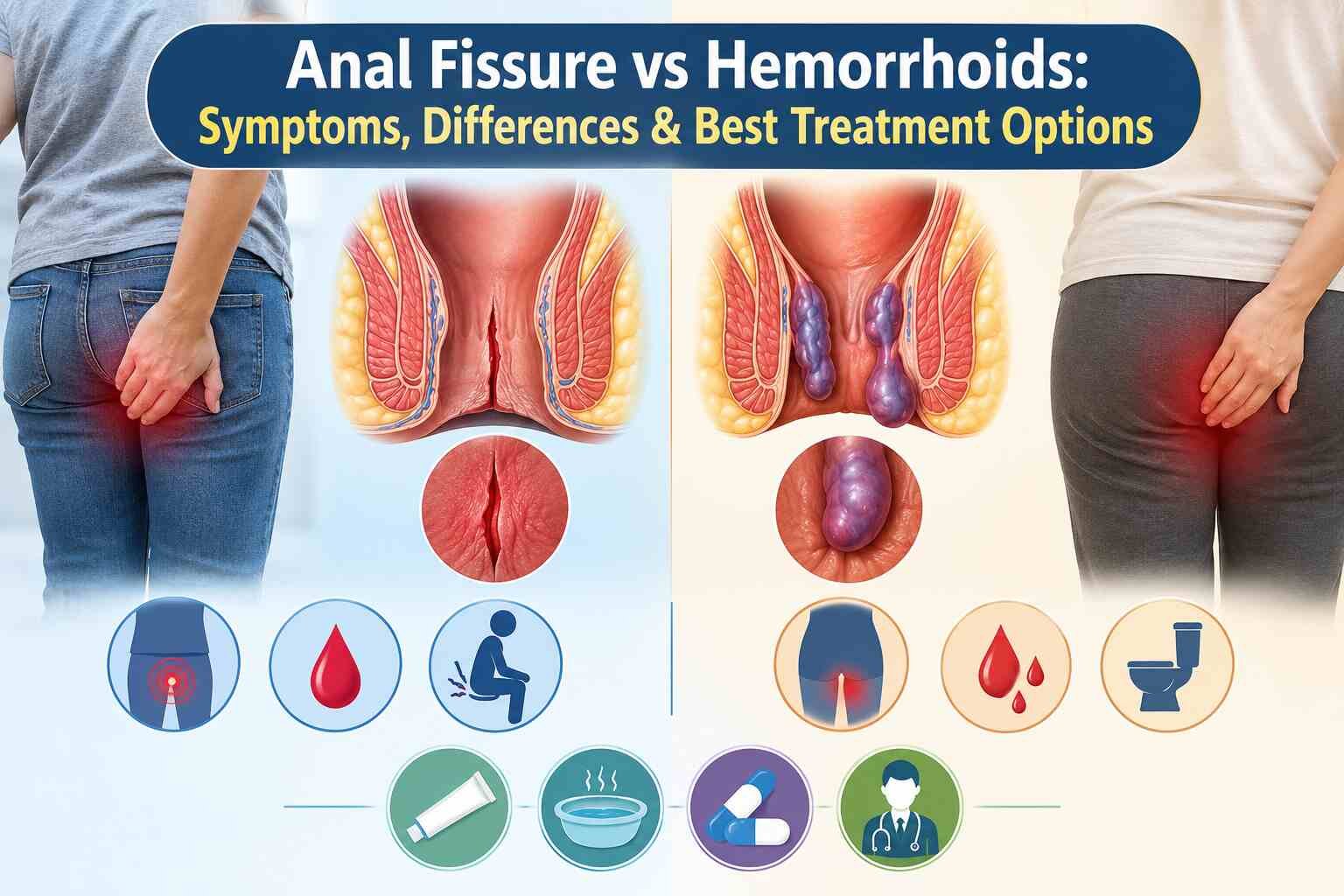
Anal fissure and hemorrhoids may appear similar because both can cause rectal pain, discomfort, and bleeding, but they affect the body differently. An anal fissure is a small cut or tear in the anal canal lining, while hemorrhoids are swollen blood vessels that develop around the anus or inside the rectum.
The experts at Dr. Piles Clinic works towards giving you precise diagnosis and effective solutions to problems such as Anal Fissure vs Hemorrhoids Knowledge about their symptoms and differences helps you seek proper treatment and get well quickly.
If you are seeking expert advice, you can look up Fissure Treatment in Delhi by experienced experts. Early diagnosis can save you from the discomforting issue later.
What Is an Anal Fissure?
Anal fissures refer to tears in the thin layer of tissue lining the anus. These are typically caused by the passage of hard stools or excessive straining while passing stools.
It is just like the cracks that may appear in dry skin except that the affected area is sensitive and may lead to painful experiences even during a regular visit to the toilet. Dr. Piles Clinic can assist you in finding ways to manage your condition.
Common causes of anal fissure include:
- Hard or large stools
- Chronic constipation
- Frequent diarrhea
- Straining during bowel movements
- Injury to the anal canal
Anal fissures can be acute (recent) or chronic (long standing). In some cases, it becomes imperative that chronic fissures should be medically treated because it becomes difficult for them to heal by themselves.
What Are Hemorrhoids?
Hemorrhoids are also called Piles, which are swollen blood vessels that appear in the lower portion of the rectum or inside the anus. Hemorrhoids can either occur internally within the rectum or externally beneath the skin in the anal region.
The causes of hemorrhoids include increased pressure within the anal veins.
Common causes include:
- Long-term constipation
- Sitting on the toilet for extended periods
- Pregnancy
- Heavy lifting
- Straining during bowel movements
Many people search for Piles Treatment in Delhi because symptoms can affect daily comfort and quality of life.
Also Read This Blog : Ksharsutra Treatment: Complete Guide to Ayurvedic Fistula & Piles Treatment
Anal Fissure vs Hemorrhoids: Key Differences
| Difference | Anal Fissure | Hemorrhoids |
| Main issue | Tear or crack in anal tissue | Swollen veins |
| Main symptom | Sharp pain during bowel movement | Bleeding, swelling, itching |
| Pain level | Usually intense and sharp | Mild to moderate discomfort |
| Bleeding | Bright red blood may appear | Bright red bleeding is common |
| Common trigger | Hard stools and constipation | Pressure on anal veins |
| Treatment approach | Healing the tear and relaxing muscles | Reducing swelling and vein pressure |
Though symptoms may seem similar, a thorough diagnosis ensures that it can be differentiated between a fissure and hemorrhoids.
Anal Fissure Symptoms You Should Know
The most common anal fissure symptoms include:
- Sharp pain while passing stool
- Burning sensation after bowel movement
- Bright red blood on toilet paper
- Tightness or spasm around the anus
- Discomfort that continues after using the toilet
Fissures cause painful sensations, and the pain experienced is sharp and tearing. Patients may decide not to be treated because there is an assumption that the fissure will heal itself.
Neglecting this will result in chronicity of the pain.
Hemorrhoids Symptoms You Should Watch For
Common hemorrhoids symptoms include:
- Bleeding during bowel movements
- Itching around the anus
- Swelling or lumps near the anus
- Pain or discomfort while sitting
- Irritation after passing stool
External hemorrhoids can show swelling, but internal hemorrhoids will bleed without feeling any pain.
Can You Have Both Anal Fissure vs Hemorrhoids Together?
Surely, situations may arise where an individual has both conditions at the same time.
For instance, the condition of chronic constipation can produce hard stools that lead to an anal fissure, in addition to exerting pressure on the veins in the anus area that cause hemorrhoids.
That is why self-diagnosis can be rather confusing because a person who bleeds assumes that he/she has piles, when the problem is actually a fissure.
Best Treatment Options for Anal Fissure vs Hemorrhoids
Treatment depends on the condition, severity, and duration of symptoms.
Fissure Treatment Options
For many patients, initial care focuses on making bowel movements easier and reducing irritation.
Common approaches include:
- Increasing dietary fiber
- Drinking enough fluids
- Using stool-softening methods when advised
- Warm sitz baths
- Prescription creams recommended by doctors
These techniques are frequently employed for non-surgical fissure treatment in early stages.
In case the problem turns chronic and does not show results after medical intervention, advanced techniques are considered by the doctors.
Patients who are seeking out professional treatment will have various choices for Fissure Treatment in Delhi through special anorectal clinics. The patient can go through Google Business Profile to verify the clinic and its location, with clinics such as Dr. Piles Clinic ( Dr. Prabhakar).
Treatment Options for Hemorrhoids
Hemorrhoid treatment depends on severity.
Mild cases may improve with:
- High-fiber diet
- Better hydration
- Avoiding excessive straining
- Lifestyle changes
For those suffering from hemorrhoids which recur, your doctor might recommend treatments based on the specific condition.
People looking for Piles Treatment in Delhi should connect with an expert who can help them identify the right treatment for their individual case.
Fissure Treatment Without Surgery: Is It Possible?
Many patients fear that fissure means surgery necessarily. This belief is not correct.
In the case of early fissures, they tend to get cured by following appropriate measures and treatment. Pain reduction, prevention of tear, and natural healing are among the primary objectives.
However, for chronic fissures, some extra procedures may be required in addition to other treatments if no improvement is observed.
When Should You Visit a Doctor?
You should consider medical advice if you experience:
- Persistent anal pain
- Repeated bleeding
- Symptoms that do not improve
- A lump or swelling near the anus
- Recurring fissure symptoms
Bleeding in the area of the rectum is not always due to hemorrhoids since other causes might be present.
Prevention Tips for Anal Fissure vs Hemorrhoids
Simple habits can reduce the risk of both conditions:
- Eat enough fiber-rich foods
- Drink adequate water
- Avoid excessive straining
- Do not delay bowel movements
- Stay physically active
- Maintain healthy toilet habits
The digestive system will be thankful if it is taken care of. It may not seem all that glamorous, but the digestive system is definitely thankful for the attention.
Conclusion
It becomes essential to know about the difference between Anal Fissure vs Hemorrhoids as then you can determine their symptoms and get the proper treatment for them. Though there are some common features shared by both of the problems, still they are different. Anal fissure means tearing while hemorrhoids mean swelling of the veins.
But, with proper care, you can manage your symptoms easily. If you need professional help for that, you can try out the Fissure Treatment in Delhi and Piles Treatment in Delhi.
Frequently Asked Questions (FAQs)
An anal fissure is a tear in the anal lining, while hemorrhoids are swollen veins around the anus or rectum. Both can cause bleeding, but fissures usually cause sharper pain during bowel movements.
Pain varies from person to person. Anal fissures often cause sharp pain during and after bowel movements, while hemorrhoids may cause swelling, itching, and discomfort.
Yes, many cases improve with proper care, dietary changes, and medical treatment. Chronic cases may require additional treatment options.
Symptoms can overlap, so a medical examination provides the most accurate diagnosis.
The best treatment depends on the exact condition, severity, and patient history. A specialist can suggest the most suitable option after evaluation.

About Dr. Piles Clinic Team
The Dr. Piles Clinic Team brings together experienced medical professionals and in-depth clinical knowledge to deliver accurate, reliable content on piles, fistula, and other anorectal conditions. Every thing is carefully created with a focus on patient awareness, practical guidance, and evidence-based insights, helping readers understand their symptoms, explore effective treatment options, and make informed healthcare decisions with confidence.
View all posts by Dr. Piles Clinic Team