

Blogs
Ksharsutra Treatment: Complete Guide to Ayurvedic Fistula & Piles Treatment

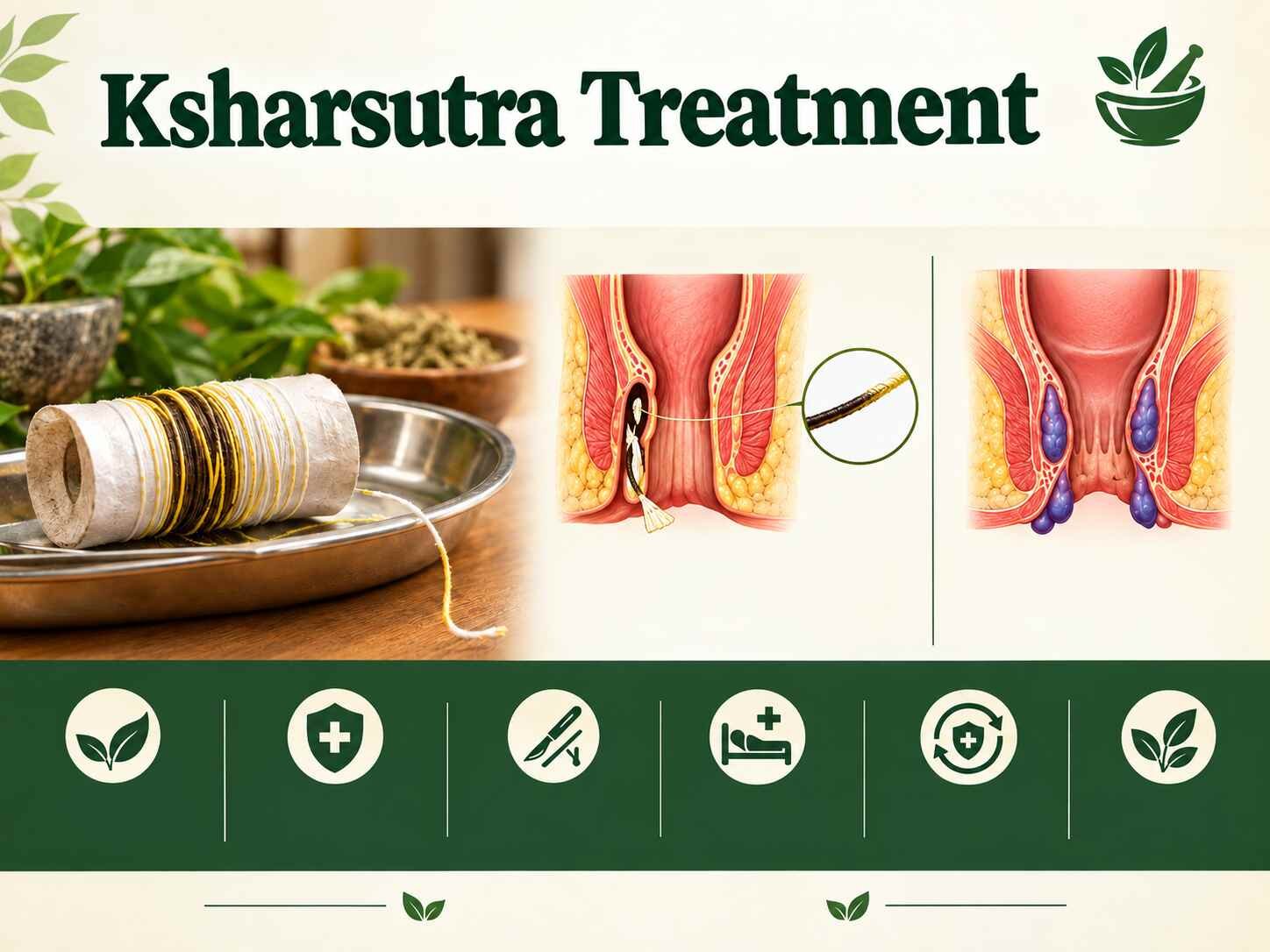
Ksharsutra treatment is an Ayurvedic parasurgical technique used mainly for managing anal fistula and certain other anorectal conditions. For people researching Ksharsutra Treatment for Fistula, the procedure is quite different from simply taking Ayurvedic medicines: it involves placing a specially prepared medicated thread through the fistula tract under professional medical care.
Anus related problems can be difficult to discuss but avoiding them doesn’t make the situation easier for you. Discharge, pain, swelling, bleeding or an abscess at the anus should be investigated because piles, fissure, abscess and fistula are different problems that have different treatments.
What Is Ksharsutra Treatment?
Ksharsutra is a medicated thread technique described within Ayurvedic surgical practice. In modern clinical literature, it is commonly discussed as a medicated seton used in the management of fistula-in-ano.
The thread is prepared using medicinal and alkaline substances according to the particular Ksharsutra method being followed. It is passed through the fistulous tract so that it gradually acts on the tract while healing takes place behind it.
Published research has evaluated different Ksharsutra preparations and techniques, so patients should not assume that every treatment labelled “Ksharsutra” is identical.
What Is an Anal Fistula?
Anal fistula is described as an abnormal channel that extends from the anal canal to the skin close to the anus, often resulting from an infection and the formation of an anorectal abscess.
Symptoms may include discharge of pus or fluid, discomfort near an opening around the anus, pain, swelling and recurrent abscesses. In many cases, symptoms tend to improve before recurring again.
This cycle is one reason medical assessment matters. Treating discharge alone does not necessarily address the underlying fistula tract.
Modern colorectal guidelines also recognise that fistulas differ considerably in their anatomy and complexity. Treatment therefore needs to consider the relationship of the tract to the anal sphincter muscles rather than applying one procedure to every patient.
How Does Ksharsutra Treatment for Fistula Work?
During Ksharsutra Treatment for Fistula, a trained practitioner first evaluates the fistulous tract. The medicated thread is then placed through the tract using an appropriate technique.
Follow-up is an important part of treatment. In several published Ksharsutra studies, the thread was changed periodically—often weekly—until the tract had been treated and healed.
This means Ksharsutra should not be viewed as a “one visit and forget it” procedure. Treatment duration depends partly on the length, course and complexity of the fistula.
A landmark multicentre randomized clinical trial involving 502 patients reported complete healing in both the Ksharsutra and conventional surgery groups. However, median healing took longer with Ksharsutra: eight weeks compared with four weeks after surgery. At the one-year follow-up period involving 150 patients in each group, the recurrence rates were 4% with Ksharsutra and 11% with surgical treatment.
Although these results are promising, they must not be used as an assurance for the patient.
What Are the Potential Benefits of Ksharsutra?
One attraction of Ksharsutra is that it provides another treatment approach for selected fistula patients.
A randomized study comparing Ksharasutra with open fistulotomy found that the Ksharasutra group had a longer average healing period but fewer days away from routine work.
Potential advantages reported across clinical studies include:
- An ambulatory treatment approach in selected patients
- Gradual treatment of the fistula tract
- Less disruption to routine work in some studies
- An alternative option when appropriately selected by a qualified practitioner
The important phrase here is appropriately selected. A complex fistula, recurrent fistula, associated abscess or fistula related to another medical condition may need a different or combined treatment plan.
Is Ksharsutra Treatment Painful?
Some discomfort should be expected, and websites promising a universally “painless” experience should be treated cautiously.
The large multicentre clinical trial reported transient local burning and increased discharge in many Ksharsutra patients. Another clinical report involving 114 patients recorded discharge in all patients and burning pain in some patients during the first 48–72 hours.
Pain and discomfort may be significantly different among different patients. The placement of the tract, the length of the tract, the procedure, and sensitivity may influence the degree of pain and discomfort experienced by the patient.
Talk to your clinician about pain and after-procedure care prior to the procedure, rather than listening to the internet promises.
Can Ksharsutra Be Used for Piles?
Ksharsutra is mostly linked with fistula-in-ano but some literature and practices in Ayurveda have seen its application in other anorectal diseases like haemorrhoids.
One clinical trial that was conducted in an Ayush-affiliated clinic looked at the effectiveness of Ksharsutra therapy in patients suffering from hemorrhoids, fistula, fissure, and other anorectal diseases.
But just because you have piles does not necessarily mean you have to undergo Ksharsutra.
There are different types of hemorrhoids, and depending on their type, severity, and symptoms, they can be treated either with diet modification and improvement of bowel habits or through surgery. If you plan to get piles treatment in Noida, then you better go through a proper diagnosis first.
How Long Does Ksharsutra Treatment Take?
There is no universal treatment duration.
The 1991 multicentre trial reported a median healing period of eight weeks for Ksharsutra, while other research has measured progress according to the length of the fistulous tract.
More extensive and complex fistulas may require more time. However, regular monitoring is one of the aspects of the procedure, not its optional addition.
In your case, your specialist will determine the schedule after examining your fistula rather than providing the specific recovery period before the examination.
Who Should Consider Ksharsutra Treatment?
Ksharsutra may be considered for selected patients diagnosed with fistula-in-ano after appropriate evaluation. Whether it is suitable depends on the anatomy and complexity of the fistula as well as the patient’s overall medical situation.
This is particularly important for recurrent or complex fistulas. The present colorectal guidelines recommend the management of fistulae with consideration being given to balancing between healing and anal sphincter function preservation. As an example, fistulae linked to Crohn’s disease are usually managed through both medicine and surgery.
In case you need a Piles Specialist in Noida, try and find one who will not perform the same procedure on everybody but who will first diagnose the problem and discuss alternative treatments.
What Should You Ask Before Starting Treatment?
Before opting for Ksharsutra therapy, find out your diagnosis first, whether the fistula is complicated or simple, the evaluation of the tract, whether Ksharsutra therapy is appropriate in your condition, the frequency of follow-ups, and complications and other possible options that you should consider.
You should also find out which symptoms require immediate treatment when you recover.
For people checking clinic directions or consultation details, you can search Dr. Piles Clinic ( Dr. Prabhakar) through its Google Business Profile and confirm the current location before travelling.
Ksharsutra Treatment vs Conventional Fistula Surgery
There is no single procedure that is automatically best for every fistula.
Ksharsutra has supportive clinical research, including randomized comparative studies. At the same time, contemporary fistula management includes fistulotomy, seton-based approaches, LIFT and other sphincter-preserving or minimally invasive techniques depending on fistula anatomy.
Research is also not completely one-sided. A more recent observational comparison of complex fistulas reported higher recurrence with Ksharsutra than with LIFT or fistulectomy during its follow-up period.
That is exactly why a trustworthy consultation should begin with diagnosis—not with a predetermined procedure.
Final Thoughts
Ksharsutra treatment is an established Ayurvedic parasurgical approach with published clinical evidence, particularly for fistula-in-ano. It appears to be helpful in certain cases, but healing may take several weeks. Follow-up is also an essential part of the treatment.
In case you wish to go for Ksharsutra Treatment for Fistula, Piles Treatment in Noida, or consult a Piles Specialist in Noida, then the first thing is to get the condition diagnosed properly. You need to ask the details regarding anatomy of the fistula, duration of recovery, pain, recurrence, other options and follow-up.
A good treatment decision is not about choosing what sounds newest, oldest or most impressive. It is about choosing what fits the actual diagnosis.
