
Blogs
Pilonidal Sinus Treatment Without Surgery: Options, Benefits & Recovery

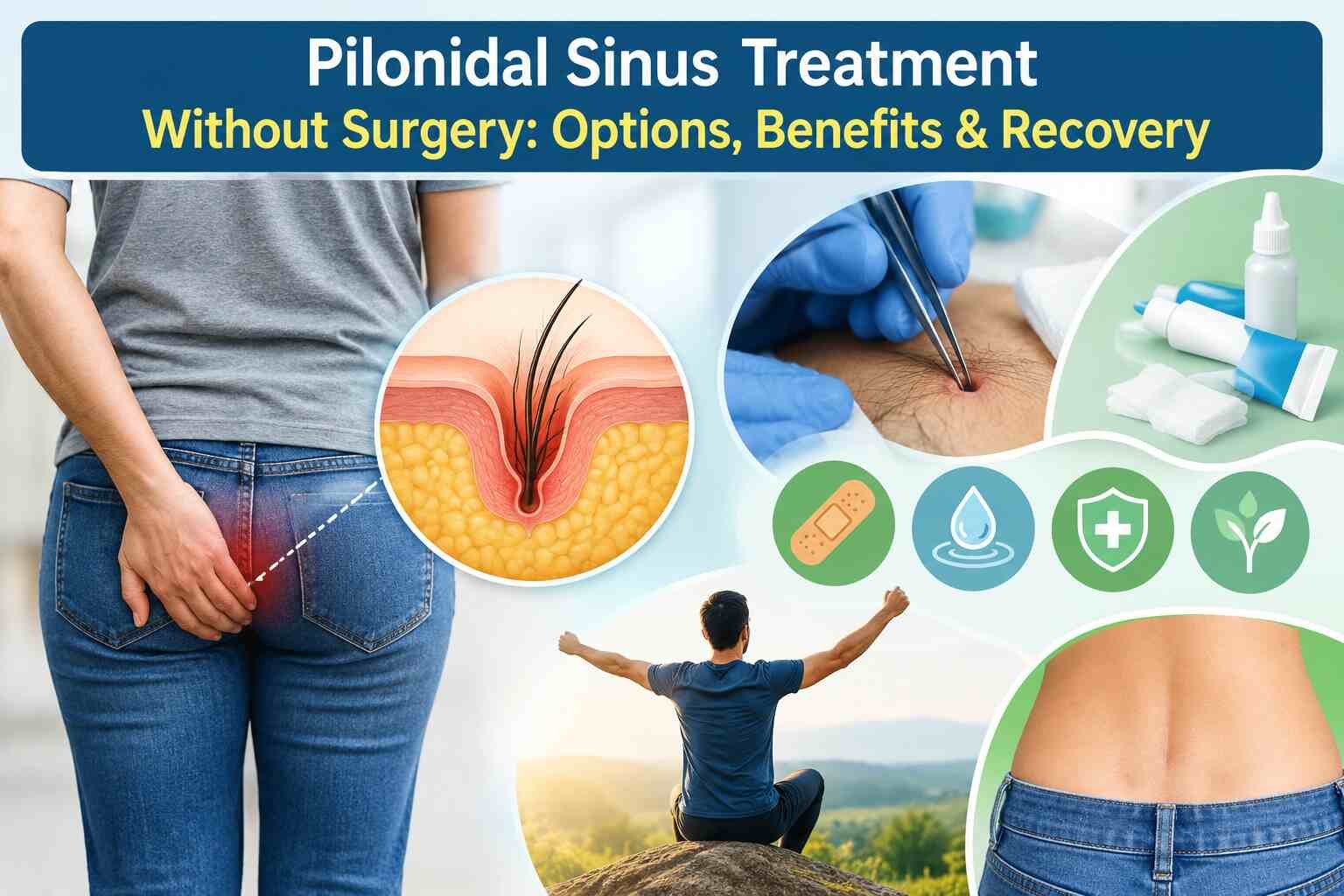
A pilonidal sinus can start as a tiny opening near the top of the buttock cleft, but once it becomes painful or infected, sitting comfortably may suddenly feel like a luxury. Understandably, many people begin looking for pilonidal sinus treatment without surgery before considering a larger surgical procedure.
Individuals researching options for the pilonidal sinus treatment in Delhi will find methods such as conservative therapy, hair removal techniques and minimally invasive surgery. But none of the treatment methods will suit all cases. The selection of treatment method should be based on the presence or absence of infection, abscess formation, length of the tract and recurrent nature of the problem.
What Is a Pilonidal Sinus?
Pilonidal sinus is a tunnel-like opening in the skin that forms normally at the bottom of the spine or in the crack of the buttocks. Friction, pressure, irritation, and hair follicle blockage are among the main factors leading to its formation as they allow hair to grow underneath the skin.
As explained by the NHS, a pilonidal sinus does not cause any symptoms until it becomes infected. Infection may result in such symptoms as pain, swelling, bleeding, redness, and pus formation. In some cases, an abscess formation may occur resulting in a lot of discomfort and difficulty sitting down.
In case of appropriate indications, conservative management of pilonidal sinus treatment without surgery can be chosen considering the severity of the problem, symptoms, and presence of abscess or infection.
It should be noted that a pilonidal sinus with abscess may need a different treatment from that used for other types of pilonidal sinuses.
Can Pilonidal Sinus Be Treated Without Surgery?
In selected cases, pilonidal sinus treatment without surgery may be possible. However, “without surgery” should not be understood as ignoring the condition or waiting without medical guidance.
According to the NHS, a pilonidal sinus that shows no signs of infection may not require treatment. In such cases, doctors may recommend monitoring the condition while maintaining good hygiene and keeping the affected area clean and dry.
When an infection, abscess, or recurring symptoms develop, the treatment approach can become more complex. An infected and swollen abscess generally needs to be drained, while antibiotics may sometimes be recommended depending on the infection and the individual’s condition.
The right approach depends on factors such as the severity of symptoms, presence of infection, recurrence, and overall skin condition. Therefore, a medical assessment is important before deciding whether pilonidal sinus treatment without surgery is appropriate. Professional evaluation can help identify the safest and most suitable treatment option for each case.
What Non-Surgical and Less-Invasive Options Are Available?
1. Hygiene and Local Care
Keeping the buttock cleft clean is one of the simplest measures for managing an uncomplicated pilonidal sinus. Regular washing can help reduce the accumulation of loose hair and debris in the area.
However, hygiene is supportive care rather than a guaranteed cure for an established or infected sinus.
The NHS even cautions individuals against shaving their affected area if their doctor has not advised doing so. This is a good point to make since one’s zeal for doing things themselves could actually irritate their skin further.
2. Hair-Removal Strategies
Hair management may form part of a treatment or recurrence-prevention plan because loose hair can contribute to pilonidal disease.
Research has paid particular attention to laser hair epilation. A 2024 systematic review and meta-analysis of three randomized controlled trials found that laser hair epilation significantly reduced pilonidal disease recurrence compared with control approaches. The researchers also noted that more high-quality studies are needed to establish the ideal timing and frequency of treatment.
An earlier systematic review similarly described laser depilation as promising but cautioned that the available studies varied considerably in design and quality.
This means laser hair removal may be useful in an appropriate care plan, but it should not be presented as a universal replacement for medical treatment.
3. Minimally Invasive Procedures
Some patients may be candidates for procedures that cause less tissue disruption than traditional wide excision.
One example is endoscopic ablation, sometimes called endoscopic pilonidal sinus treatment. A small endoscope allows the clinician to see inside the sinus. Hair and affected tissue can then be removed, the tract cleaned and heat used to help seal it.
The NHS describes endoscopic ablation as less invasive than conventional surgery because it does not require a large cut.
Guy’s and St Thomas’ NHS Foundation Trust also notes that the procedure creates small wounds and can allow an earlier return to normal activities.
It is important to be precise here: a minimally invasive procedure is still a medical procedure. It should not automatically be described as completely “non-surgical.”
Also Read : Ksharsutra Treatment Complete Guide to Ayurvedic Fistula & Piles Treatment
What Are the Potential Benefits of Avoiding Major Surgery?
For appropriate cases, conservative treatment might imply minimal disruption to the patient’s daily activities. It is based on the treatment used that benefits might include small incisions, reduced wound management and faster recovery back to normal activities.
However, the most significant advantage is not just about “not going through surgery”. The advantage lies in opting for the less invasive procedure to manage the ailment.
It might be quite an easy method; however, if it doesn’t tally with the severity of your ailment, then it might only delay your treatment.
If you are considering pilonidal sinus treatment in Delhi, then try asking the physician about the method of treatment being recommended to you for your sinus.
How Long Does Recovery Take?
Recovery depends heavily on the treatment.
Someone with an uninfected sinus who is being monitored may not need a conventional recovery period at all. After drainage of an abscess, wound dressing and follow-up may be necessary. Minimally invasive procedures can have shorter recovery periods than larger excisional operations, although individual healing times vary.
For example, the NHS says endoscopic ablation may take around a month for complete healing, although recovery can sometimes be quicker.
Patients must abide by their doctor’s advice regarding hygiene, dressing changes, exercising and resuming work instead of adhering to an automatic timetable provided by the internet.
When Should You See a Doctor?
There should be no delay in getting assessed in case the area is painful, swollen, bleeding or discharging pus. This could suggest infection.
Repeated infections also deserve medical assessment. Recurrent or extensive disease may need a different approach from a first mild episode.
For individuals looking for a pilonidal sinus treatment in Delhi, another location to consider is that on Google Business Profile for Dr. Piles Clinic ( Dr. Prabhakar) . While location is important, the more important factors should be clinical examination, proper selection of treatment method, and proper advice thereafter.
Are Pilonidal Sinus, Fistula and Anal Fissure the Same Condition?
No. These conditions may be talked about together since they affect similar regions of the body, but they are distinct illnesses and cannot be used interchangeably.
Pilonidal sinus normally occurs on the skin overlying the top part of the buttock cleft. Anal fissures are tears in the skin covering the anus, whereas anal fistulas refer to abnormal channels that are normally formed between the anus and surrounding skin.
Hence, any discussion regarding Ksharsutra Treatment for Fistula should be in regard to anal fistula rather than pilonidal sinus disease.
Similarly, when doing research on Ayurvedic treatment for fissure, one must ensure that the correct diagnosis is established.
Can Pilonidal Sinus Come Back After Treatment?
Yes. Recurrence will remain an issue when dealing with pilonidal disease, irrespective of the therapy used.
There are instances when hair control will be helpful. Some studies that involve randomized trials have proven that laser hair removal helps in minimizing recurrences in the case of pilonidal disease treatment. The research community continues to investigate the best regimen for treating this condition.
Long-term management must take into consideration issues other than managing the first attack. Follow-up, hygiene, and hair control if medically recommended are important factors.
Final Thoughts
Pilonidal sinus treatment can even be done without surgery, depending on the choice of the patient, as well as on the nature of the condition and its status. There may be other methods which can help solve the problem.
But there is always a possibility that the presence of infection, abscess, pus-filled cavity, and constant discharges will lead to necessity in conducting draining. There should be no aim in avoiding any surgical intervention regardless of anything.
The size of the pilonidal sinus seems to be insignificant, but the most correct method of treatment will depend on the right diagnosis made.
