

Blogs
Piles vs Fissure vs Fistula: Key Differences Every Patient Should Know

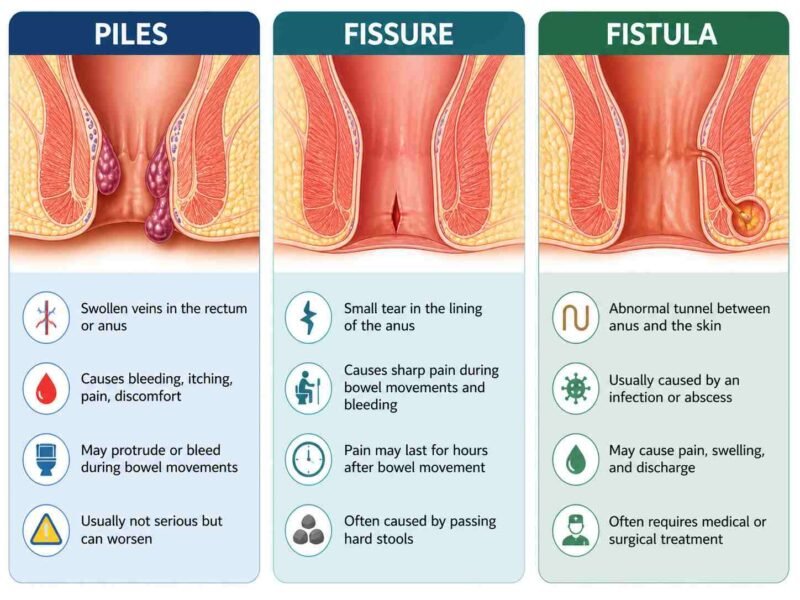
If you feel pain, bleeding, or discomfort in the anal area, you might assume it’s just piles. But hold on, that’s not always the case. Many patients confuse piles vs fissure vs fistula, and this confusion often delays proper treatment.
People who search for fissure treatment in Delhi and piles treatment in Delhi tend to lack knowledge about their actual medical condition. This situation marks the beginning of all difficulties.
We will explain everything through straightforward language which maintains complete accuracy in medical terminology and avoids creating any unnecessary anxiety.
What Are Piles, Fissures, and Fistulas?
Before we compare piles vs fissure vs fistula, let’s understand each condition.
1. Piles (Hemorrhoids)
Piles are swollen veins in the rectum or anus. The condition develops when pressure builds up, which results from constipation and extended sitting and the effort to pass stool.
Common signs:
- Bleeding during stool
- Itching or irritation
- Swelling around the anus
2. Anal Fissure
A fissure is a small tear in the lining of the anus. It usually occurs due to passing hard stools.
Common signs:
- Sharp pain during and after bowel movement
- Bright red bleeding
- Burning sensation
Patients searching for fissure treatment in Delhi often describe this pain as “like passing glass.” That’s how intense it can feel.
3. Anal Fistula
A fistula is an abnormal tunnel which connects the anal canal to the skin located near the anus. The condition typically arises after an individual experiences an infection or an abscess.
Common signs:
- Persistent discharge
- Swelling or pus
- Recurrent pain
Also Read : Ayurvedic Treatment for Fissure: Natural Relief Without Surgery
Piles vs Fissure vs Fistula: Key Differences
Let’s make this simple and practical.
| Condition | Main Cause | Pain Level | Bleeding | Other Signs |
| Piles | Swollen veins | Mild to moderate | Common | Itching, swelling |
| Fissure | Tear in lining | Severe | Bright red | Burning pain |
| Fistula | Infection tunnel | Moderate | Rare | Pus discharge |
This table helps you quickly understand the difference between piles and fissure, and how both differ from fistula.
Why Do People Confuse These Conditions?
Simple answer—symptoms overlap.
- Bleeding? Could be piles or fissure
- Pain? Could be fissure or fistula
- Swelling? Could be any of the three
That’s why self diagnosis often goes wrong. A proper check up matters.
Pain Tells You More Than You Think
Here’s a quick logic trick:
- Sharp, cutting pain → likely fissure
- Painless bleeding → likely piles
- Persistent discharge → likely fistula
Doctors often use these patterns during diagnosis. Still, don’t rely only on guesswork.
Fissure vs Piles vs Fistula: What Causes Them?
Let’s connect the dots.
Common Causes
- Chronic constipation
- Low fiber diet
- Sitting for long hours
- Poor hygiene
The National Institute of Diabetes and Digestive and Kidney Diseases (NIDDK) indicate that constipation is a significant factor in anorectal disorders. This is why diet and lifestyle are more significant than what many think.
When Should You See a Doctor?
Don’t wait if you notice:
- Bleeding for more than 3–4 days
- Severe pain during stool
- Pus or discharge
- Lump near the anus
If you’re looking for piles treatment in Delhi or fissure treatment in Delhi, early consultation can save you from surgery in many cases.
Clinics like Dr. Piles Clinic helps patients identify the exact condition with proper diagnosis instead of guesswork.
Diagnosis: It’s Not Guesswork
Doctors use:
- Physical examination
- Proctoscopy
- Imaging (for fistula cases)
An experienced specialist like Dr.Prabhakar Singh focuses on identifying the root cause, not just symptoms.
Treatment Options: What Actually Works?
1. Piles Treatment
- Diet changes
- Medications
- Laser procedures (in advanced cases)
Many patients searching for piles treatment in Delhi now prefer minimally invasive options.
2. Fissure Treatment
- Stool softeners
- Warm sitz baths
- Medicated creams
If symptoms persist, doctors may suggest advanced treatment. That’s why timely fissure treatment in Delhi becomes important.
3. Fistula Treatment
- Surgery is often required
- Laser techniques are becoming popular
Fistula does not heal on its own. Ignoring it only makes things worse.
Lifestyle Tips That Actually Help
Let’s keep this real—no magic cures.
- Eat high-fiber foods (fruits, vegetables, whole grains)
- Drink enough water
- Avoid sitting for long hours
- Don’t ignore the urge to pass stool
These habits reduce the risk of fissure and fistula as well as piles.
Common Myths (Let’s Clear Them)
Myth 1: All bleeding means piles
Not true. It could be a fissure or something more serious.
Myth 2: Home remedies cure everything
They help early stages, not advanced conditions.
Myth 3: Surgery is always needed
Not always. Early diagnosis reduces the need.
Fissure vs Fistula: A Quick Reality Check
Many people confuse fissure vs fistula, but they differ a lot.
- Fissure = tear
- Fistula = tunnel infection
One heals with medication (in early stages), the other usually needs surgery.
Final Thoughts
You will find relief from suffering and treatment errors and time loss when you understand the differences between piles and fissures and fistulas.
You must obtain a proper diagnosis when you observe symptoms because you should not make guesses about your condition. The combination of early treatment and effective treatment results in faster recovery and lower expenses and prevention of medical complications.
The correct diagnosis should be your initial step before you start searching for fissure treatment in Delhi or piles treatment in Delhi. If you’re experiencing symptoms or need the right diagnosis, don’t delay contact us today or visit Dr. Piles Clinic to get expert care and personalized treatment you can trust.
Frequently Asked Questions (FAQs)
The main difference lies in their cause and symptoms. Piles are swollen veins, a fissure is a tear in the anal lining, and a fistula is an infected tunnel. Pain is usually highest in fissures, while fistulas often cause discharge.
No. Bleeding can also occur in fissures and other conditions. That’s why understanding the difference between piles and fissure is important before starting any treatment.
A fissure can heal with medicines and lifestyle changes in early stages. But a fistula usually requires a medical procedure or surgery for complete treatment.
Treatment depends on severity. Mild cases improve with diet and medication, while advanced cases may need procedures like laser treatment. Many patients now prefer modern options under piles treatment in Delhi for faster recovery.
Home remedies like fiber-rich diets and warm baths can help in early stages. But they may not work for severe cases, especially in fistula or chronic fissure conditions.
Most modern treatments, especially laser procedures, are minimally invasive and cause less pain compared to traditional surgery.

About Dr. Piles Clinic Team
The Dr. Piles Clinic Team brings together experienced medical professionals and in-depth clinical knowledge to deliver accurate, reliable content on piles, fistula, and other anorectal conditions. Every thing is carefully created with a focus on patient awareness, practical guidance, and evidence-based insights, helping readers understand their symptoms, explore effective treatment options, and make informed healthcare decisions with confidence.
View all posts by Dr. Piles Clinic Team