

Blogs
Top 5 Common Causes of Fistula with Symptoms and Prevention Tips

Pain near the anal area is not exactly dinner-table conversation. Most people ignore it for weeks, hoping it disappears on its own. Unfortunately, an Anal Fistula rarely works that way. Without proper care, the condition may become painful, recurrent, and difficult to manage.
Many patients searching for the best fistula in ano treatment in Delhi often want to understand what actually causes fistula problems before choosing treatment. Knowing the root cause helps patients take faster action and avoid complications later.
A fistula develops from an infection or an abscess that occurs close to the anus. The condition establishes a minor passage which connects the outer skin to the inner anal canal. The condition appears straightforward but it creates significant disruptions to everyday activities.
The person experiences pain when sitting and discomfort when walking and they must avoid sneezing because it has become a dangerous activity.
The guide presents the top 5 common causes of fistula development together with their key symptoms and effective prevention methods based on medical sources.
What Is an Anal Fistula?
An anal fistula is a small infected tunnel that develops between the anal canal and the skin around the anus. It commonly appears after an untreated or poorly healed Abscess.
Doctors usually classify it as a chronic anorectal condition because it often returns if the underlying infection remains untreated.
Common fistula symptoms include:
- Pain while sitting
- Swelling near the anus
- Pus or blood discharge
- Skin irritation
- Fever in some cases
- Recurrent anal infections
Many patients initially mistake fistula symptoms for piles or minor infections. That delay often makes treatment more complicated.
Also Read : Piles vs Fissure vs Fistula: Key Differences Every Patient Should Know
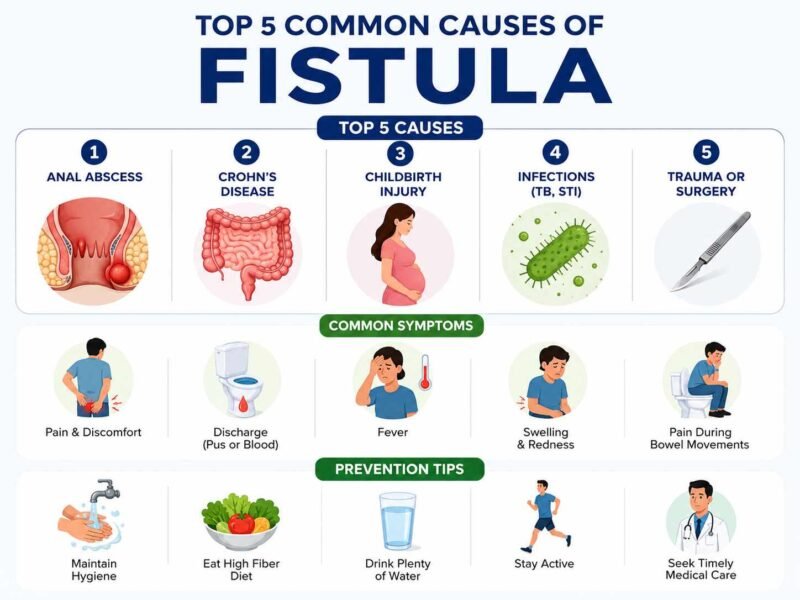
Top 5 Common Causes of Fistula
1. Anal Abscess and Infection
The most common cause of fistula is an untreated anal abscess.
An abscess forms when bacteria infect small glands inside the anal canal. Pus collects inside the tissue and creates swelling, pain, and redness. If the abscess bursts or drains improperly, it may leave behind a tunnel called a fistula.
Infection plays a major role in most causes of fistula infection.
Common warning signs include:
- Severe pain
- Swelling near the anus
- Fever
- Pus drainage
Quick treatment of an abscess may reduce the risk of fistula development significantly.
2. Crohn’s Disease
Crohn’s Disease constitutes a severe digestive disorder which results from persistent intestinal inflammation.
People with Crohn’s disease experience continuous damage to their anal region which leads to repeated anal infections and ulcer development and fistula formation.
The Crohn’s and Colitis Foundation reports that fistulas represent one of the most frequent complications associated with Crohn’s disease.
This condition increases:
- chronic inflammation
- rectal tissue damage
- recurrent abscess formation
Patients with digestive disorders should never ignore repeated anal pain or discharge.
3. Diabetes
Diabetes may increase the risk of infection and slow wound healing.
High blood sugar levels weaken immune response, making bacterial infections more common. That is why diabetic patients often face recurring skin infections and delayed healing after abscesses.
Poorly managed diabetes can contribute to:
- fistula pain
- recurrent infections
- slow recovery after surgery
Doctors often recommend better blood sugar management as part of long-term fistula prevention tips.
4. Tuberculosis
Tuberculosis impacts multiple body systems beyond its primary effect on lungs. The disease progresses to affect both intestines and anal region in exceptional situations. The disease of intestinal tuberculosis results in tissue destruction together with abscess development and permanent fistula creation.
Doctors still consider tuberculosis as a diagnostic possibility for complex and recurring fistula cases although the disease occurs less frequently in modern times especially in countries with high TB rates. The need for additional medical evaluation arises when a patient experiences ongoing discharge and develops multiple infections.
5. Inflammatory Bowel Disease
Inflammatory bowel diseases like ulcerative colitis and Crohn’s disease can damage digestive tissues over time.
Ongoing intestinal inflammation weakens surrounding tissues and increases the risk of recurrent infections and fistula formation.
Patients with digestive disorders often experience:
- bowel irregularities
- abdominal pain
- rectal swelling
- chronic inflammation
Early diagnosis and disease management help reduce complications.
Common Symptoms of Anal Fistula
Recognizing symptoms early can help patients seek faster medical care.
Common Fistula Infection Symptoms
- Pain near the anus
- Swelling or redness
- Pus discharge
- Bad odor from drainage
- Skin irritation
- Fever or fatigue
- Pain during bowel movements
These symptoms often worsen if the infection spreads deeper into surrounding tissues.
Patients searching for the best doctor for piles in Delhi sometimes later discover they actually have a fistula instead of piles because both conditions share similar symptoms initially.
How Doctors Diagnose Fistula
A proper fistula diagnosis usually includes:
- Physical examination
- Medical history review
- MRI or ultrasound imaging
- Proctoscopy in some cases
Doctors evaluate the fistula tract carefully before recommending treatment.
Accurate diagnosis matters because different fistulas require different surgical approaches.
Fistula Treatment Options
Modern medicine offers several effective fistula treatment options depending on severity and complexity.
Common Treatments Include
- Antibiotics for infection control
- Drainage of abscess
- Fistulotomy surgery
- Seton placement
- Laser Treatment for fistula
Laser treatment has become popular because it often causes less tissue damage and supports faster recovery compared to traditional surgery in selected cases.
Patients searching online for the best fistula in ano treatment in Delhi frequently look for minimally invasive procedures that reduce hospital stay and recovery time.
Many patients also search for Dr. Piles Clinic on Google Business Profile when looking for fistula consultation and treatment information in Delhi.
Fistula Prevention Tips
While not every fistula can be prevented, healthy habits may reduce risk.
Helpful Prevention Tips
- Treat anal abscesses early
- Maintain proper hygiene
- Manage diabetes carefully
- Avoid chronic constipation
- Eat fiber-rich foods
- Stay hydrated
- Seek medical care for recurring pain or swelling
Ignoring symptoms rarely works in healthcare. The human body usually sends reminders louder than unpaid subscription notifications.
When Should You See a Doctor?
Please seek medical attention if you experience:
- recurrent pus discharge
- severe anal pain
- swelling near the anus
- fever with anal infection
- bleeding during bowel movements
Early treatment prevents complications and improves healing outcomes.
Patients looking for the best doctor for piles in Delhi should also choose clinics experienced in anorectal disorders because piles and fistulas often require different treatment approaches.
Final Thoughts
The top 5 common causes of fistula existence must be understood by patients for them to identify symptoms and receive necessary medical care. Fistulas develop because infection and abscess formation and Crohn’s disease and diabetes and chronic inflammation all present conditions that lead to their formation. The current medical field provides modern treatment options through laser procedures which create better recovery experiences for multiple patients. The most critical step of diagnosing medical conditions requires completion before any other process can continue. Medical professionals who specialize in Delhi hospital fistula in ano treatment can help patients who experience persistent symptoms through their expertise to achieve better health outcomes and enhanced life quality. If you are facing ongoing discomfort or recurring infection, you can contact us for professional guidance and personalized treatment support.
Frequently Asked Questions (FAQs)
The most common cause of an anal fistula is an untreated anal abscess caused by bacterial infection near the anal glands.
Common fistula symptoms include pain near the anus, swelling, pus discharge, skin irritation, and discomfort during bowel movements.
Some minor infections may improve temporarily, but most anal fistulas usually require medical or surgical treatment for complete healing.
Yes, untreated fistulas may lead to recurring infections, abscess formation, chronic pain, and complications over time.
People with Crohn’s disease, diabetes, chronic infections, or inflammatory bowel disease have a higher risk of developing fistulas.
Doctors diagnose fistulas through physical examination, medical history, MRI scans, ultrasound imaging, or proctoscopy.

About Dr. Piles Clinic Team
The Dr. Piles Clinic Team brings together experienced medical professionals and in-depth clinical knowledge to deliver accurate, reliable content on piles, fistula, and other anorectal conditions. Every thing is carefully created with a focus on patient awareness, practical guidance, and evidence-based insights, helping readers understand their symptoms, explore effective treatment options, and make informed healthcare decisions with confidence.
View all posts by Dr. Piles Clinic Team