

Blogs
What Is a Rectal Polyp? Causes, Symptoms and When to Worry

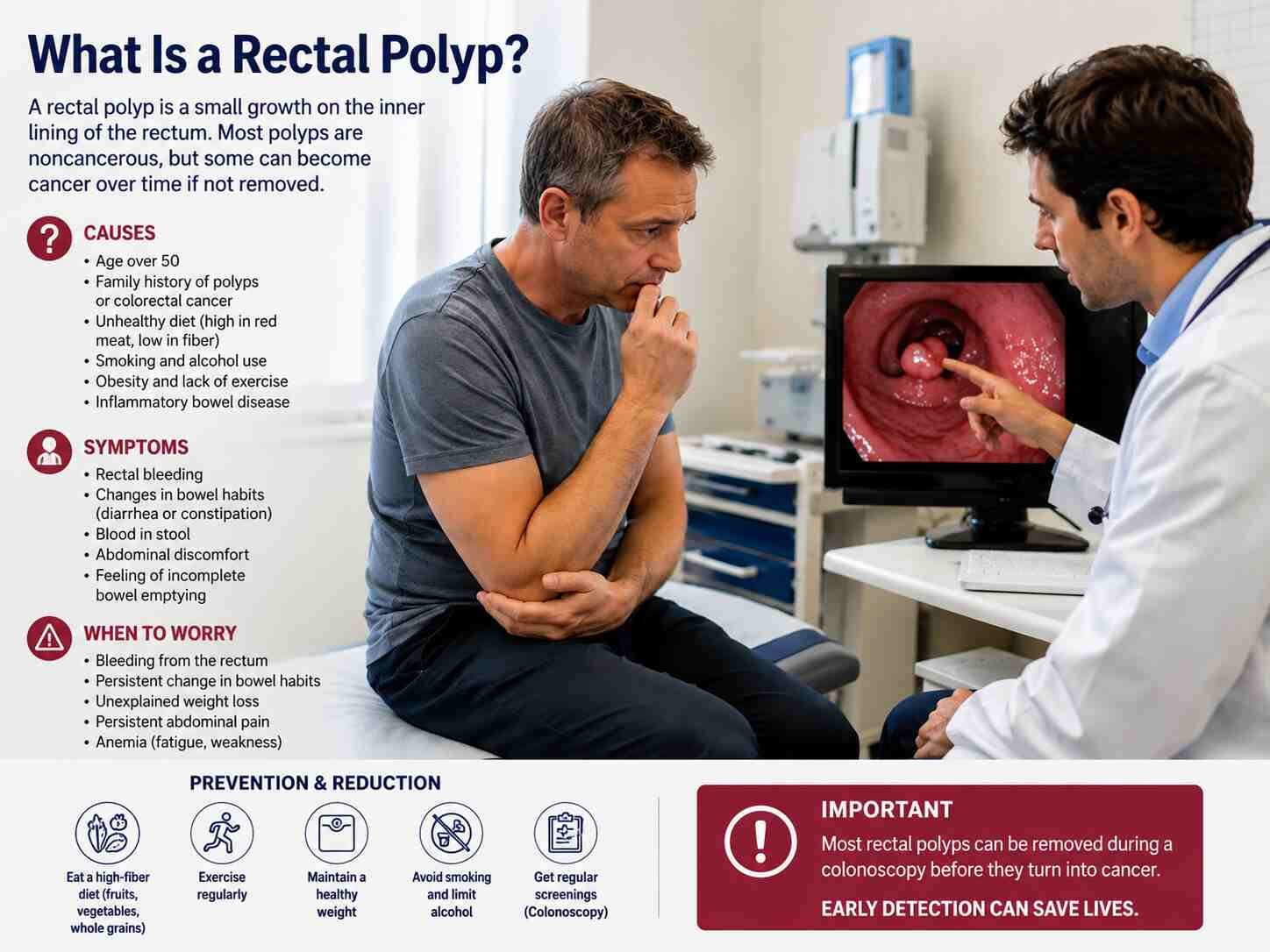
Are you confused about the presence of a rectal polyp in your body and wondering if it is dangerous or not? It is quite normal to get worried; however, the good part is that most rectal polyps can be treated effectively by diagnosing them at an early stage. Knowing more about the signs, reasons, and rectal polyp treatment will certainly help you prevent any kind of problems in the future. At Dr. Piles Clinic, we believe that patients who know about their diseases are always able to make better decisions concerning their health issues. Under the guidance of Dr. Prabhakar, we work on the right diagnosis and treatment of the patient’s condition to provide him with the best healthcare.
Understanding the Condition Beyond the Diagnosis
Rectal polyps are the abnormal tissue growths inside the rectum. Although most of the polyps are benign, some of them might become dangerous after several years and transform into colon cancer.
According to the American Cancer Society, removal of precancerous polyps greatly lowers the chances of getting colorectal cancer. Likewise, NIDDK states that early detection still remains among the most effective prevention methods.
That is why rectal polyp treatment should be done immediately rather than waiting for complications. There can be multiple causes that aren’t always known. However, there are factors increasing the probability of getting polyps. These include age more than 45 years old, family history of colorectal conditions, obesity, smoking, alcohol abuse, inflammatory bowel disease, and lack of fibre-rich food.
According to the American Cancer Society, removal of precancerous polyps greatly lowers the chances of getting colorectal cancer. Likewise, NIDDK states that early detection still remains among the most effective prevention methods. That is why rectal polyp treatment should be done immediately rather than waiting for complications.
What Are the Causes of Rectal Polyps?
There can be multiple causes that aren’t always known. However, there are factors increasing the probability of getting polyps. These include age more than 45 years old, family history of colorectal conditions, obesity, smoking, alcohol abuse, inflammatory bowel disease, and lack of fibre-rich food. Lifestyle aside, there are genetic factors involved too. Our specialists thoroughly examine the patient’s past medical records to determine the best treatment plan.
Understanding pilonidal sinus treatment in delhi
Sometimes patients come to our hospital to get pilonidal sinus treatment in Delhi. They also talk about some other anorectal problems. One such anorectal problem is polyps. Though it is a different disease from others, a clinical assessment helps in getting a proper diagnosis of any other disease also.
Common Symptoms You Should Never Ignore
Some individuals do not have any symptoms at all in the initial stages. In cases where symptoms are present, they may include changes in bowel movements, mucus secretion, abdominal pain, or Rectal Bleeding. This symptom should always be considered a red flag because it can also be an indication of other problems in the gastrointestinal system. Consulting your specialist will allow for proper diagnosis and timely treatment of rectal polyp treatment.
Are All Polyps Cancerous?
Good news: this is not the case. Most polyps are not malignant in the early stages. Still, some specific kinds, especially adenomatous polyps, are more prone to cancer development.
Importance of Early Clinical Evaluation
Each patient needs an accurate diagnosis rather than just guessing through the symptoms. There are various diseases like piles, fissure, fistula, and rectal polyps which can have the same symptoms but still require different treatment procedures. So, an in-depth consultation helps us understand the actual reason before prescribing the treatment.
The Role of Colonoscopy in Diagnosis
Colonoscopy is one of the most effective techniques for diagnosing rectal polyps. Through this technique, Dr. Piles Clinic examines the large intestine by means of a flexible camera and thus gets an actual view of the situation. According to ASGE (American Society for Gastrointestinal Endoscopy), colonoscopy is the most effective method for finding colorectal polyps and preventing colon cancer.
Maintaining Long-Term Digestive Health
Changes in lifestyle can be added to the conventional treatment. One can consume more fruits and vegetables, stay physically active, keep a normal weight and avoid smoking in order to reduce the risk of developing other problems in the future. People taking Ayurvedic treatment for fissure often wonder about their efficacy in treating polyps. Although digestive therapy may improve bowel function, rectal polyp treatment has to be properly checked by a physician.
Treatment depends upon the size and type of polyps
Treatment procedures differ according to the number, size, and type of polyps. Smaller polyps are removed during Colonoscopy, whereas larger or suspicious growths might need advanced endoscopic techniques or surgery. Each treatment plan is customised according to the analysis reports.
Follow-Up Care Is Equally Important
Removal of the polyp does not guarantee that one will not develop any new growths in future. Some people may develop more polyps in future. Following up the procedure and undergoing Colonoscopy in case recommended by the treating doctor will allow monitoring of the colorectal condition and detection of new growths at the early stages.
Also Read This Blog: KsharSutra Treatment Explained: Benefits, Procedure & Recovery
When Should You Seek Medical Attention?
It is important not to ignore the symptoms such as Rectal Bleeding, unexplained weight loss, constant constipation, persistent mucus, abdominal pain or abnormal stool habit lasting for several weeks. Rectal polyp treatment is always more effective if done on time, particularly when symptoms are noticed before complications arise.
Pro Tips for Better Colorectal Health
- Never ignore blood in your stool, even if it appears only once.
- Eat a fibre-rich diet and drink adequate water daily.
- Stay physically active to support healthy bowel function.
- Follow recommended colorectal screening schedules, especially after age 45 or earlier if you have a family history.
- Do not self-medicate persistent digestive symptoms without medical evaluation.
- Attend follow-up appointments as advised by your doctor.
You should not ignore your digestive health, especially if you notice any symptoms that might be harmless at first but keep appearing. Early diagnosis and proper treatment will help you stay away from complications and ensure the best possible colorectal health in the future. Our experts at Dr. Piles Clinic, headed by Dr. Prabhakar, will provide the most personalised approach for you. Dr. Piles Clinic supports all its patients through each step of the diagnosis and treatment. Contact us, Get in touch with our team today to find out how we can help your business. Our Team is here to guide you towards safer and healthier digestive care with confidence.
