
Blogs
Ayurvedic vs Allopathic Fistula Treatment: An Honest Side-by-Side Comparison

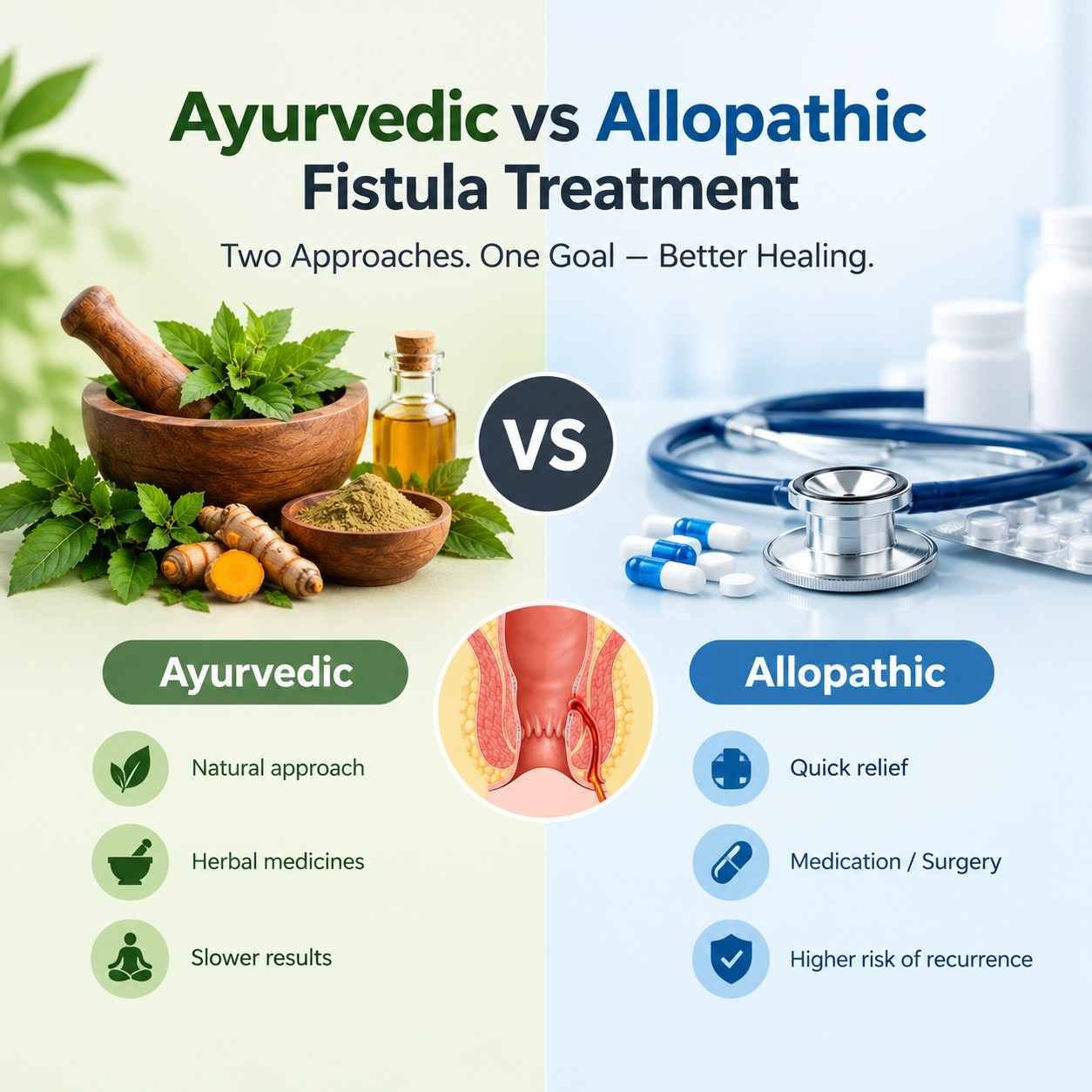
Anal fistula can result in constant pain, swelling, discharge, and irritation in everyday activities. There is always a dilemma when deciding which mode of treatment to take into consideration – whether to opt for Ayurvedic treatment or modern medicine. Knowing the difference between the two could prove helpful in making such a decision.
While at an Ayurvedic clinic for piles, one may consider exploring the traditional methods like Kshar Sutra, while the modern practitioners may advise surgical procedures. Dr. Piles Clinic may prove to be a good starting point, but what would best suit one can only be ascertained by clinical examination and not based on any assumptions of either method.
What Is an Anal Fistula, and Why Does Treatment Matter?
Anal fistula is a passage or abnormal opening from the anal canal that opens into the skin around the anus. This condition arises after infection and formation of anal abscess. Some of the symptoms associated with it include recurring discharge, inflammation, irritation, pain, and infections.
In most cases, a fistula does not heal permanently without proper treatment. The position of the fistula, how it affects the anal sphincter muscles, and other health problems that may be present will determine the treatment process. This is the reason a fistula diagnosis is necessary to choose between Ayurveda and surgery.
Ayurvedic Treatment for Fistula: What Should You Know?
The traditional medicine, supportive care, and specialized procedures are all part of the Ayurvedic treatment for fistula. Kshar Sutra therapy is one of the traditional therapies discussed, which uses a medicated thread passed through the fistula tract.
The thread is retained over time by a trained practitioner, to slowly treat the tract. This is appropriate in some situations, however, and may require re-visits and follow-up monitoring.
Distinction between the traditional approach and the clinically proved one is very crucial. Some forms of Ayurveda have varying degrees of evidence to support them, while any claim that a medication is completely without pain, a sure way of curing the problem, or prevention of a recurrence needs to be treated carefully.
Fistula Surgery vs Ayurveda: Comparing the Main Differences
In analyzing Fistula surgery vs Ayurveda, look at the type of treatment, the recovery process, possible complications, and post-treatment considerations. Neither procedure will be appropriate for everyone.
| Comparison factor | Ayurvedic approaches | Modern medical treatment |
| Common methods | Kshar Sutra therapy and supportive care | Fistulotomy, seton placement, selected sphincter-preserving procedures, or laser techniques |
| Initial assessment | Requires examination and evaluation of the fistula | May involve clinical examination, imaging, and specialist assessment |
| Treatment duration | May involve repeated thread changes and follow-up visits | Depends on the procedure, fistula complexity, and healing |
| Recovery | Discomfort and wound care may continue during treatment | Recovery varies by procedure and individual circumstances |
| Potential risks | Pain, irritation, infection, or delayed healing | Bleeding, infection, recurrence, and possible effects on bowel control |
| Evidence | Depends on the specific method and available research | Evidence and outcomes vary by procedure and patient selection |
The comparison illustrates the need for individualized treatment. The mere name of the treatment method does not ensure success or safety.
How Does Laser Fistula Treatment Compare With Other Options?
Fistula laser treatment is one form of minimally invasive treatment in which the use of laser energy can be applied to treat the fistula. However, this form of treatment may not be applicable to all cases of fistulas.
Other surgical procedures, including fistulotomy, may be adequate for some simple fistulas, and some complex fistulas might necessitate the use of techniques that will spare the anal sphincter. The aim is not just to close the tract but to also take into consideration risk of recurrence and preservation of bowel control.
When selecting a procedure, inquire from the specialist why it is appropriate for your own fistula, alternatives that are available, and the limitations of the evidence.
Understanding Fistula Treatment Recovery Time and Aftercare
The recovery time for treatment of the fistula depends on the type of procedure performed, and on the nature and severity of the fistula and a person’s recovery. For some patients, normal activities can resume relatively soon, for others, more extended treatment of the wound and follow-up visits are required.
The post-operative care can involve wound care, medication for discomfort, soft stools, wound cleaning and check-ups. If patients have fever, more pain, more swelling, or heavy bleeding, they should also seek immediate medical attention.
If you need individual advice, please consult Dr. Piles Clinic about options for assessment and treatment. Additionally, you can get information on the treatment of fissures from the doctors of the east delhi region who are experts in the field of fissure treatment.
Which Factors Influence Fistula Treatment Outcomes?
It is not solely dependent on the choice of treatment modality. The complexity of the fistula, prior surgeries, accompanying infections, and the skill level of the physician performing the procedure may all affect results.
Before proceeding, consider these key questions:
- Has the fistula’s complete tract and complexity been assessed?
- What are the expected benefits, risks, and chances of recurrence with the recommended method?
- How much follow-up, wound care, and recovery time might be needed?
This will assist in setting realistic expectations. Dr. Piles Clinic can be consulted on any matters concerning assessment and treatment, but it is important that the patient ensures his or her final treatment choice is done after clinical assessment.
Frequently Asked Questions
1. Is Ayurvedic treatment effective for an anal fistula?
Though some people prefer Kshar Sutra procedure, the outcome is based on the type of fistula and the method applied. Some information is controversial, so it is advisable to consult a physician for further discussion of the options available.
2. Is surgery always necessary for an anal fistula?
There are many anal fistulas that will need a procedure for healing. Depending on the location and complexity of the fistula, the type of intervention vary. A specialist can inform you if surgery or an approved method may be appropriate.
3. Can laser treatment prevent fistula recurrence?
There is no process that can be done to ensure that a fistula never recurs. The factors which contribute to this include the anatomy of the fistula and its treatment process.
4. When should I consult a specialist?
Consult your doctor when you experience continual discharge, recurring swelling, soreness around the anus area, or an abscess. When you have fever or rapidly increasing pain, seek medical advice immediately.
Conclusion
Deciding upon either approach depends on a realistic grasp of the situation, evidence, dangers, and possible prognosis. Traditional methods like Kshar Sutra as well as modern techniques may be used in specific clinical scenarios, but it is not advisable to present either as fool-proof. An accurate diagnosis and customized treatment is very important.
The availability of such choices could be obtained by contacting Dr. Piles’ Clinic, whereas a competent specialist will assist in choosing what would suit the particular individual.