

Blogs
Persistent Anal Itching (Pruritus Ani): Causes, Triggers and Relief

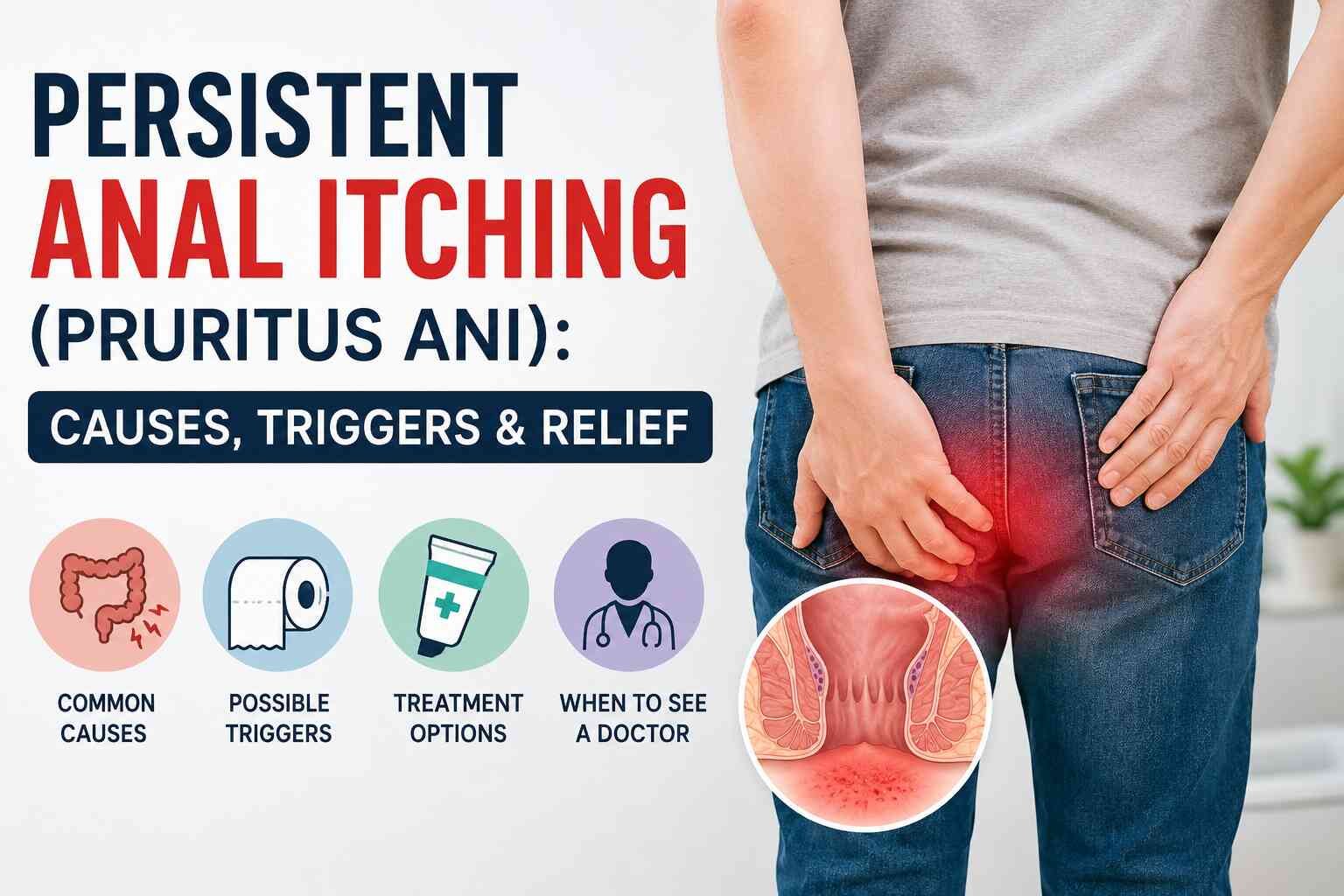
Have you ever experienced itching in your anus which keeps coming back? It might be more severe after you use the bathroom at night, after sweating. Although itching isn’t uncommon to anyone, chronic itching can be uncomfortable, frustrating and even embarrassing. The medical term used to describe the problem is pruritus ani.
What is the cause? There’s no single solution. The skin is irritated, there are bowel problems and fissures, piles infections, and specific skin issues can be at play. Understanding the anal itching causes and treatment options available will help you determine the root of the issue and if it’s time to get checked.
What Is Pruritus Ani?
Pruritus ani is the medical term for itching around the anus, which can be persistent or occur only once.
In addition to the itching, the affected skin can feel sore and irritated, and become tinged with redness or sensitivity. You may even get the sensation of being burned. Avoid scratching. This may bring some relief, but you should remember that the cycle of itching and scratching will ruin your skin and worsen the situation.
This can turn into an annoying cycle: itching → scratching → irritated skin → more itching.
What Causes Persistent Anal Itching?
What could be causing the itching? Dry skin, of course, but constipation, diarrhea, piles, fissures, skin infections, and even certain skin conditions can lead to itching.
Your Soap or Wipes Could Be Irritating the Skin
The skin around the anus is thin and can be irritated easily. Soaps and wipes that contain fragrances or even certain detergents, creams, and toilet paper can be problematic.
Washing the area a lot can be a problem, too. Scrubbing the area dries the skin and can lead to irritation that makes itching worse.
Think about if there’s a connection. Did you notice the itching after you started using a personal-care product?
Constipation and Diarrhea Can Play a Role
Changes in your bowel routine can cause itchiness in the anal region.
Wiping very frequently due to diarrhea can irritate the anal region. Repeated exposure of the anal skin to stool can irritate and cause anal itching. Constipation can lead to straining and may result in loss of control causing piles or hemorrhoids.
For some people, mucus, stool or even just a little bit of fecal matter can cause anal itching.
Can Piles Cause Anal Itching?
They can. Piles may prevent you from properly cleaning the region affecting piles due to swelling and mucus. Leakage of small amounts may also cause irritation to the skin that surrounds the piles.
Do not assume that every case of itching is caused by piles. If the issue is chronic, then there are some other underlying reasons for the itching.
If you have other symptoms that are anorectal related, Dr. Piles Clinic can help you understand if it’s time to consider anorectal disorder treatment in east delhi.
What About an Anal Fissure?
An anal fissure is the term for a small tear in the anal lining. With anal fissures, individuals may experience pain or burning when having bowel movements. Some patients may feel itching and irritation around the anal area.
It is important that you do not continue to treat itching if you are experiencing pain or bleeding from the anal area. You should consult a doctor for fissure treatment in Delhi.
Fungal Infections and Skin Problems
A fungal infection can cause itchiness, redness and rashes around the anus that can also be accompanied by pain and burning sensations. Dermatitis and eczema have similar symptoms.
Every case of itching shouldn’t be mistaken for fungal infections. Self-prescribing antifungal creams can be a misstep.
Could Pinworms Be the Reason?
Another possible cause are pinworms. People itch worse at night because pinworms lay eggs in the anal region.
Just because you itch at night does not mean you have pinworms. There are many other reasons you could itch that is worse at night like, dry skin, sweat, and irritated skin.
Why Does It Itch After a Bowel Movement?
For some people, itching starts after a little while using the toilet.
Loose stools leave more mess around your backside, and some people find that they need to wipe more. Added irritation from wiping more, or piles and mucus leaking can be even more problematic.
Instead of rubbing the area, clean the area gently. Avoid vigorously drying your skin with a towel after washing.
Why Is Anal Itching Worse at Night?
Itchy skin can really hurt at night, and it can affect your ability to get rest.
There are some potential causes, including pinworms. However, itchy skin is often caused by a variety of factors, including severe sweating, dry skin, tight clothing, warm temperatures and less stimulation.
Don’t assume itching is caused by worms if you find yourself waking up every morning due to itching. There may be other underlying causes that need to be addressed.
Anal Itching Causes and Treatment: What Can Help?
The anal itching causes and treatment approach will depend on the root of your symptoms. . There is no one cream or remedy for everyone.
If you’re irritated from using a soap, wipe, or other product, you may need to stop using it. If you think constipation or diarrhea is a factor, improving your bowel habits may fix it. Infections (cysts, cancer), piles, fissures, or other skin conditions may require their own treatments.
You can try some simple things to relieve mild itching. Gently clean the area, let the area dry, avoid scented products, and use breathable fabric for your undergarments. Also, try your best not to scratch.
It is also not a good idea to try different creams just because they seem to work for others because different products can irritate your skin more.
When Should You Get Anal Itching Checked?
If you scratch more than usual or continue to feel the itch after making minor changes, get it checked by a doctor.
You should consider getting this checked immediately if you have bleeding, severe pain, swelling, a bump, discharge, skin that appears to break, rash that does not go away, changes in skin appearance, or changes in bowel movements.
If a doctor has to investigate the cause of the itching, the first line of questioning is usually about bowel movements, hygiene, products, and the presence of other symptoms.
Dr. Piles Clinic suggests seeking medical attention sooner rather than treating yourself multiple times for symptoms that persist.
Final Thoughts
Anal itching may also occur due to products used, a change in bowel habits, or excessive moisture and not necessarily poor hygiene. Consider if you have piles, fissures, infections or an underlying skin condition.
Understanding the time of day you experience anal itching and the other symptoms you experience may help you to understand the anal itching causes and treatment that may be relevant to your situation.
If the itching continues or you’re unsure what’s causing it, contact Dr. Piles Clinic to discuss your symptoms and arrange a consultation.
Frequently Asked Questions About Pruritus Ani
Can anal itching go away on its own?
In times of temporary irritation, anal itching can go away on its own when the irritation is removed. However if anal itching occurs on a recurrent basis, it would be advisable to look for the underlying cause.
Does anal itching mean it’s an infection?
No. Anal itching can be caused by piles, fissures, skin irritation, constipation, diarrhea, moisture, skin dermatitis, and many other things.
Why does my anus itch after I poop?
Stool residue can be extremely itchy. Itching after a bowel movement can be caused by frequent and excessive wiping, loose stools, and mucus. Itching after a bowel movement can also be caused by piles and irritated skin.
Why is my anus itchy at night?
Pinworms can be very itchy at night, constipation is worse at night, so is dry skin and irritation. So itching at night can be caused from many things.
Can washing too much cause anal itching?
Yes. Too much washing, strong soaps, irritating wipes, and scrubbing can cause itching.
When should I see a doctor for anal itching?
If the anal itching does not improve, or comes back and causes pain, bleeding, swelling, discharge, changes to the skin or the bowel, then it is time to see the doctor.

About Dr. Piles Clinic Team
The Dr. Piles Clinic Team brings together experienced medical professionals and in-depth clinical knowledge to deliver accurate, reliable content on piles, fistula, and other anorectal conditions. Every thing is carefully created with a focus on patient awareness, practical guidance, and evidence-based insights, helping readers understand their symptoms, explore effective treatment options, and make informed healthcare decisions with confidence.
View all posts by Dr. Piles Clinic Team