

Blogs
Is Piles Genetic?

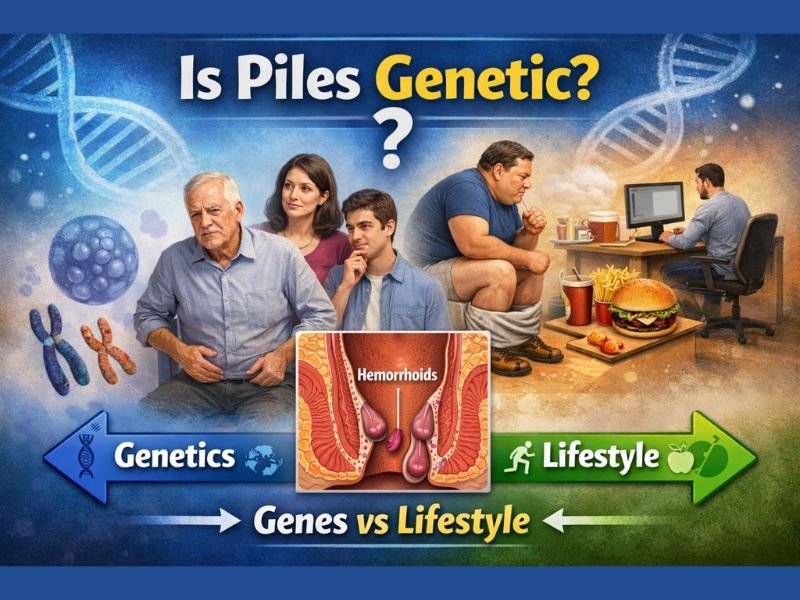
When it comes to piles, also known as hemorrhoids few questions create as much curiosity as is piles genetic? Many people observe that if parents or siblings suffer from piles, sooner or later, someone else in the family develops similar discomfort. And thus, confusion arises: is it destiny woven in DNA, or the result of shared lifestyle habits? To explore this, let’s examine what science and clinical experience, especially that of Dr. Piles Clinic and Dr. Prabhakar Singh, reveal about heredity, genes, and lifestyle in relation to piles.
Is Piles Hereditary or Not?
Before we jump to conclusions, let’s clarify what “hereditary” actually means. If a disorder is hereditary, it’s passed down from parents to children through genes. So, is piles hereditary? Research shows that piles can have a hereditary tendency—families often share weak vein structures or connective tissues, making them more susceptible. However, heredity increases risk; it doesn’t determine fate. You can inherit the propensity, not the certainty. In fact, many people with a family history never develop hemorrhoids when they maintain healthy habits like high-fibre diets and regular exercise. You can read more about lifestyle factors that increase the risk of piles that may amplify or reduce this risk.
Piles: Is Piles Genetic or Not: Medical Explanation
The debate over whether piles are genetic or not finds its answer in the medical explanation of how piles form. At the core, piles develop due to swollen veins and pressure in the rectal area. Genetics can make those veins weaker or the connective tissue more prone to stretching. Still, that’s only part of the story. The larger culprit is lifestyle—chronic constipation, excessive straining, sitting for long periods, and poor diet. So while a gene might make your tissues more elastic or veins more fragile, whether you actually develop piles depends largely on how you treat your digestive system. In short, genetics opens the door; lifestyle walks you through it.
Is Piles Genetic Disease?
If you’re wondering if piles are a genetic disease, it’s crucial to understand classification. True genetic diseases are directly caused by gene mutations that are transmitted regardless of behaviour, conditions like cystic fibrosis or sickle cell anaemia. Piles doesn’t belong to that club. Although family history can guide susceptibility, piles isn’t an inherited disease—it’s a condition influenced by multiple factors. Dr. Piles Clinic often sees patients with no family history yet significant piles symptoms, reinforcing that while genes whisper, habits shout. Therefore, piles are better understood as a “genetically influenced condition” rather than a “genetic disease.”
Is Hemorrhoids Genetic?
“Piles” and “hemorrhoids” are two terms for the same problem—swollen anal veins. So, is hemorrhoids genetic? The answer follows the same pattern: certain genetic traits, like vein structure or tissue integrity, may predispose someone, but the environment decides everything else. People in one family often share dietary choices and bowel patterns, which explains why hemorrhoids seem to “run in the family.” For early detection and care, see our detailed guide on early signs and symptoms of hemorrhoids that help you identify the condition before it worsens.
Are Hemorrhoids Hereditary or Lifestyle-Related?
This question—are hemorrhoids hereditary or are they the consequence of lifestyle is like asking whether it’s genetics or diet that decides body shape. The truth? It’s both, in cooperation. Genes provide the physical foundation, but lifestyle builds upon it. Straining during bowel movements, eating low-fibre foods, dehydration, and prolonged sitting in offices or on motorbikes gradually inflame those delicate rectal veins. Add pregnancy or obesity, and the problem deepens. While some inherit fragile veins, others “earn” them through years of strain and inactivity. Read more about diet-related causes of hemorrhoids and preventive lifestyle changes for piles to safeguard yourself if you carry a family history.
What Causes a Hemorrhoid?
So, what causes a hemorrhoid in the first place? In clinical terms, hemorrhoids occur when pressure increases in the lower rectum. Pregnancy, obesity, age-related weakening of tissues, and chronic constipation can all play a part. In some people, genetic weaknesses magnify these triggers. Straining during bowel movements and sitting for extended hours impairs blood flow and enlarges the hemorrhoidal veins. A sedentary urban lifestyle, common in Delhi, only adds to the risk. To understand the biological side, check our insights on the medical understanding of piles development—how pressure gradually leads to swollen veins and painful symptoms.
How Do People Get Hemorrhoids?
If you’ve ever wondered how people get hemorrhoids, imagine the veins around your rectum working overtime. When stool is hard, straining becomes frequent. This increases venous pressure, causing the veins to balloon out. Diets lacking in fibre, chronic coughing, heavy lifting, and pregnancy make it worse. Over time, this repeated strain damages supporting tissues. The earliest signs—itching, discomfort, mild bleeding—often go unnoticed. By catching these early indicators, you can prevent progression into severe piles. Curious about expert help? Explore when to consult a piles specialist before it advances.
What Are the Causes of Internal Hemorrhoids?
Internal hemorrhoids develop inside the rectum and are usually painless because there are fewer pain receptors there. What are the causes of internal hemorrhoids? Common factors include prolonged constipation, excessive straining, and genetic predisposition. Ageing weakens the connective tissues that support veins inside the rectum, leading to bulging. Unlike external hemorrhoids, these may bleed silently. Though invisible, they demand timely care from a skilled proctologist such as Dr. Prabhakar Singh.
When to Consult a Piles Specialist in Delhi
If you notice persistent bleeding, itching, or discomfort, it’s time to seek help instead of tolerating silent suffering. Early consultation prevents complications and ensures faster recovery. Don’t delay when symptoms interfere with your comfort or confidence. Dr. Piles Clinic, under the direction of Dr. Prabhakar Singh, specialises in holistic and minimally invasive treatments—combining Ayurvedic wisdom with modern precision to eliminate piles gently and permanently.
Advanced Piles Treatment at Our Clinic
At Dr. Piles Clinic, treatments focus on restoring normal venous flow, relieving pain, and preventing recurrence. Dr. Prabhakar Singh, a renowned Ano-Rectal Surgeon with over three decades of experience, incorporates advanced Ayurvedic para-surgical therapies such as Ksharsutra, Agnikarma, and Panchkarma. These procedures offer patients quick recovery—no hospital stays, no heavy bleeding, and minimal discomfort. Thousands of patients across Delhi have found lasting relief here. Visit our clinic to experience the compassionate expertise that defines Dr. Piles Clinic, where every treatment plan is tailored to your unique condition and comfort.
Conclusion
So, is piles genetic? The most accurate answer: genetics can make you susceptible, but lifestyle makes you symptomatic. Family history may open the window, but everyday choices either keep it shut or swing it wide open. Whether your piles are inherited tendencies or lifestyle-generated, timely treatment transforms recovery. Choose the experience, compassion, and specialised care that only Dr. Piles Clinic and Dr. Prabhakar Singh can provide. Take the first step today—consult a trusted expert and reclaim comfort and confidence in your everyday life.
Frequently Asked Questions (FAQs) – Is Piles Genetic?
Piles can have a mild genetic influence, but lifestyle plays the larger role. Poor diet, constipation, straining, and long sitting hours often trigger symptoms more than inherited traits.
Yes, piles can appear in multiple family members due to shared genetic vein weakness or similar eating and bathroom habits, but heredity simply increases risk—it doesn’t make piles inevitable.
Piles is not a genetic disease. It’s a condition influenced by various factors like weak vein walls, constipation, and poor digestive habits, rather than a single hereditary mutation.
Studies suggest hemorrhoids may have a hereditary aspect, yet activities such as prolonged sitting, low fiber intake, and frequent straining remain the leading causes of flare-ups.
Even without genetic links, hemorrhoids develop from excessive pressure in the rectal veins caused by constipation, pregnancy, obesity, or long hours of sitting—common in modern working lifestyles.
Internal hemorrhoids often result from inherited vein fragility, chronic constipation, and lack of bowel discipline. Genetic tendencies combine with lifestyle factors to make internal piles more likely.
Yes, both men and women can inherit a predisposition to piles, though triggers may differ—men from long sitting or heavy lifting, and women from pregnancy or childbirth pressures.
Yes, even if piles is genetic, it can be permanently treated. Advanced Ayurvedic and minimally invasive therapies at Dr. Piles Clinic provide lasting relief with no repeated recurrence.
Absolutely. Eating fiber-rich foods, staying hydrated, avoiding long sitting periods, and exercising regularly greatly reduce the chances of piles, even in those with hereditary susceptibility.
Consult Dr. Piles Clinic and Dr. Prabhakar Singh if you experience bleeding, irritation, or pain while passing stool. Early treatment ensures a complete cure and prevents severe complications.